An arrest warrant in Santa Cruz County, California, is a legal document issued by a judge that authorizes law enforcement to arrest a specific individual. These warrants are only issued after a review of probable cause—meaning there must be solid evidence that a person has committed a crime. Once signed, the warrant becomes active and remains in effect until the individual is arrested, appears in court, or posts bail. Warrants do not expire on their own and can be enforced at any time, even years later. This makes it critical for residents to know how to check for active warrants, especially before traveling, applying for jobs, or attending court hearings.
Residents of Santa Cruz County have several official and reliable methods to search for arrest warrants. The primary tool is the Santa Cruz County Sheriff’s Office online warrant database, which allows users to look up active warrants using a name or case number. In addition to online searches, individuals can contact the Sheriff’s Office directly by phone or visit in person for assistance. The county also provides access to jail rosters, inmate locators, and court records, all of which can help verify warrant status. These resources are maintained by law enforcement and court officials to ensure accuracy and compliance with California public records laws.
Official Online Warrant Search Tools
The Santa Cruz County Sheriff’s Office maintains a publicly accessible online system for searching active arrest warrants. This tool is updated regularly and reflects real-time data from the county’s law enforcement databases. It is the most direct and reliable way for residents to check if a warrant exists under their name or someone else’s. The system is free to use and does not require registration or personal identification beyond the search criteria.
Using the Sheriff’s Office Warrant Search Portal
To begin a search, go directly to the official Santa Cruz County Sheriff’s Office warrant search page at http://sccounty01.co.santa-cruz.ca.us/SHF/New%20SearchWarrants/Default.aspx. This is the only official county-run portal for warrant lookups. Once on the page, you will see a form with two input fields.
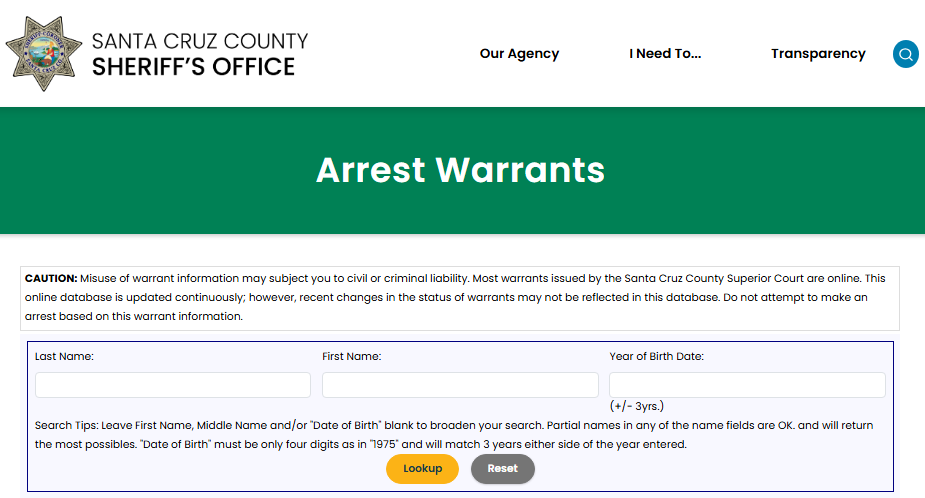
- Type the full last name of the person you are searching for in the first box labeled “Last Name.”
- Type the first name in the second box labeled “First Name.”
- Click the Search button to submit your query.
The system will return a list of matching records. Each entry includes the following exact data points: Full Name, Date of Birth, Warrant Number, Charge Description, Charge Code, Issuing Court, Bond Amount (if applicable), and Status (Active or Served). If no results appear, it means no active warrant exists under that name in the current database. Note that middle names or initials are not required, but may help narrow results.
The Search Results and Limitations
Results from the online warrant search reflect only those warrants processed through the Santa Cruz County Sheriff’s Office. They do not include federal warrants, warrants from other counties, or sealed records. If a warrant was issued but not yet entered into the system, it may not appear. Additionally, minor spelling variations or outdated names (such as maiden names) could affect search accuracy.
- Always double-check the spelling of the name entered.
- If no results appear, try searching with just the last name.
- For individuals with common names, include the date of birth if known to filter results.
The system does not allow bulk searches or automated queries. Each search must be conducted manually. Results are displayed immediately and can be printed or saved for personal records. For legal purposes, a printed copy from this portal is considered an unofficial record. Only a certified document from the court or the Sheriff’s Office holds legal weight.
Alternative Online Resources for Warrant Verification
If the primary warrant search does not yield results, residents can use the California Department of Justice’s statewide criminal records database. While not specific to Santa Cruz County, this resource includes arrest records, court dispositions, and warrant history for individuals across the state. Access is available through authorized third-party sites that comply with California’s Criminal Justice Information Services (CJIS) policies.
- These databases require identity verification and may charge a fee.
- They often include records from multiple counties, increasing the chance of finding cross-jurisdictional warrants.
- Results may take 24–48 hours to process.
Another option is the Santa Cruz County Superior Court’s online case search portal. This tool allows users to search by case number or party name and will show if a warrant was issued as part of a criminal case. It includes both active and closed cases, providing a broader context for legal history.
Phone and In-Person Warrant Inquiry Methods
For individuals without internet access or those who prefer direct communication, the Santa Cruz County Sheriff’s Office offers phone-based warrant inquiries. This method is especially useful for urgent situations or when online results are unclear. Trained personnel can verify warrant status and next steps.
Contacting the Warrants and Civil Processes Unit
The primary point of contact for warrant-related questions is the Warrants and Civil Processes Unit. Call 831-454-7601 during regular business hours (Monday–Friday, 8:00 AM to 5:00 PM). When calling, have the following information ready:
- Full legal name of the person in question
- Date of birth
- Last known address
- Any known case numbers or charge descriptions
Staff will search internal databases and confirm whether an active warrant exists. They can also explain the type of warrant (bench, arrest, or civil), the issuing court, and whether bail has been set. Note that callers must provide accurate identification, and the office may limit details if the inquiry involves an ongoing investigation.
Visiting the Sheriff’s Office in Person
Residents may visit the Santa Cruz County Sheriff’s Office headquarters to request warrant information in person. The address is 701 Ocean Street, Santa Cruz, CA 95060. Walk-in inquiries are accepted at the front desk during business hours. Bring a valid government-issued photo ID and any relevant documentation, such as a citation or court notice.
- Request to speak with a representative from the Records or Warrants Unit.
- Provide the full name and date of birth of the person being searched.
- Receive a verbal confirmation or printed summary of warrant status.
In-person requests may result in faster resolution, especially if additional verification is needed. However, the office does not issue certified warrant documents on-site. For official records, a formal request must be submitted to the court clerk.
Other Relevant Phone Numbers for Arrest and Warrant Information
Several other departments within the Sheriff’s Office handle related inquiries. Use the following numbers based on your specific need:
| Purpose | Phone Number |
| Arrest and inmate information | 831-454-7800 |
| Main Jail inmate details | 831-454-7800 |
| General Sheriff’s Office inquiries | 831-471-1121 |
| Criminal case investigations | 831-454-7630 (Sheriff), 831-420-5820 (Santa Cruz PD) |
| Victim assistance | 831-454-2400 |
| Anonymous tip line | 831-454-7631 |
| Police and accident reports | 831-454-7600 |
Each department operates independently, so calling the correct number ensures faster service. Avoid using emergency lines (911) for non-urgent warrant checks.
Jail Rosters and Inmate Search for Warrant Confirmation
The Santa Cruz County Main Jail maintains a public inmate locator that can help confirm whether someone is currently in custody due to an active warrant. This tool is updated daily and includes individuals booked within the last 30 days. While it does not list warrants directly, recent arrests often stem from outstanding warrants.
Accessing the Online Inmate Locator
Visit the Santa Cruz County Sheriff’s website at https://www.scsheriff.com and navigate to the “Inmate Search” section. The direct link to the search tool is typically found under the “Jail” or “Public Records” tab. Once there, enter the following:
- Last Name in the designated field
- First Name in the next field
- Click Search
The system returns a list of current inmates matching the name. Each entry shows: Full Name, Booking Date, Housing Location, Charges, Bail Amount, and Scheduled Release Date. If a person appears in the roster, it confirms they were recently arrested—possibly due to a warrant. However, absence from the roster does not guarantee that no warrant exists, as the individual may not have been apprehended yet.
Interpreting Jail Roster Data
Jail rosters are useful for verifying recent arrests, but have limitations. They only include individuals currently detained. People with warrants may still be at large. Additionally, the roster does not distinguish between warrants and other arrest reasons, such as probation violations or new charges.
- Check the “Charges” field for terms like “FTA” (Failure to Appear) or “Bench Warrant,” which indicate warrant-related arrests.
- Note the “Booking Date” to determine how recently the person was taken into custody.
- Use the “Bail Amount” to assess whether release is possible.
For historical data, contact the Records Division at 831-454-7600. They can provide arrest logs and booking summaries upon request, though some records may require a formal public records act submission.
Understanding Mugshot and Arrest Log Publications
The Sheriff’s Office periodically publishes arrest logs and mugshots on its website and through local media partnerships. These logs list recent bookings, including names, charges, and arrest dates. While not a warrant search tool, they can alert the public to recent enforcement actions.
- Logs are typically updated weekly.
- Mugshots are removed after release or case dismissal, per California privacy laws.
- Logs do not include warrant issuance dates or court details.
Residents can use these logs to cross-reference names and identify potential warrant activity. However, they should not be relied upon as definitive proof of warrant status.
Court Records and Case Search for Warrant History
Arrest warrants are often tied to criminal court cases. Searching court records can reveal whether a warrant was issued, recalled, or remains active. The Santa Cruz County Superior Court provides online access to case information, including warrant issuance and status updates.
Using the Court Case Search Portal
Go to the official Santa Cruz County court records search. This portal allows searches by:
- Party Name
- Case Number
- Attorney Name
Enter the full legal name in the “Party Name” field and click “Search.” Results display all related cases, including criminal, traffic, and civil matters. Click on a case number to view detailed information. The case summary includes: Case Title, Filing Date, Case Type, Status (Active, Closed, Dismissed), Charges, Hearing Dates, and Warrant Information. If a warrant was issued, it will be listed under “Case Events” with the date and type (e.g., bench warrant for failure to appear).
Interpreting Warrant Status in Court Records
Court records provide more context than Sheriff’s databases. They show whether a warrant was issued, recalled, or quashed. Key indicators include:
- Warrant Issued: Confirms an active warrant exists.
- Warrant Recalled: Means the warrant was canceled, usually after the person appeared in court.
- Bench Warrant: Typically issued for failing to appear in court or violating probation.
- Arrest Warrant: Issued after a criminal complaint is filed.
These records are updated in real time and are considered more authoritative than third-party sites. For legal proceedings, attorneys and defendants often rely on court records to verify warrant status.
Requesting Certified Court Documents
To obtain a certified copy of a warrant or court order, visit the Santa Cruz County Superior Court Clerk’s Office at 701 Ocean Street, Room 110, Santa Cruz, CA 95060. Bring a completed request form, valid ID, and payment for fees (typically $15–$25 per document).
- Certified documents are required for legal defense, immigration cases, or employment verification.
- Processing takes 1–3 business days.
- Some records may be sealed or restricted by court order.
Phone inquiries about court records can be made at 831-454-2060. Staff can confirm document availability but cannot provide legal advice or interpret case outcomes.
Background Checks and Criminal History Reports
Employers, landlords, and individuals may need to conduct background checks that include warrant history. While public databases provide basic information, comprehensive reports require access to state and federal systems.
Free vs. Paid Background Check Services
Free online searches, such as the Sheriff’s warrant portal, are useful for preliminary checks. However, they lack depth and may miss records from other jurisdictions. Paid services offer broader coverage but vary in accuracy.
- Free tools: Limited to Santa Cruz County, updated daily, no cost.
- Paid services: Include statewide and national databases, often with employment and credit history.
- Official reports: Issued by the California Department of Justice, require fingerprinting and identity verification.
For legal or employment purposes, only official background checks from authorized agencies are accepted.
Obtaining an Official Criminal History Report
Residents can request their own criminal history (RAP sheet) from the California Department of Justice. Visit https://oag.ca.gov/fingerprints to start the process. You will need to:
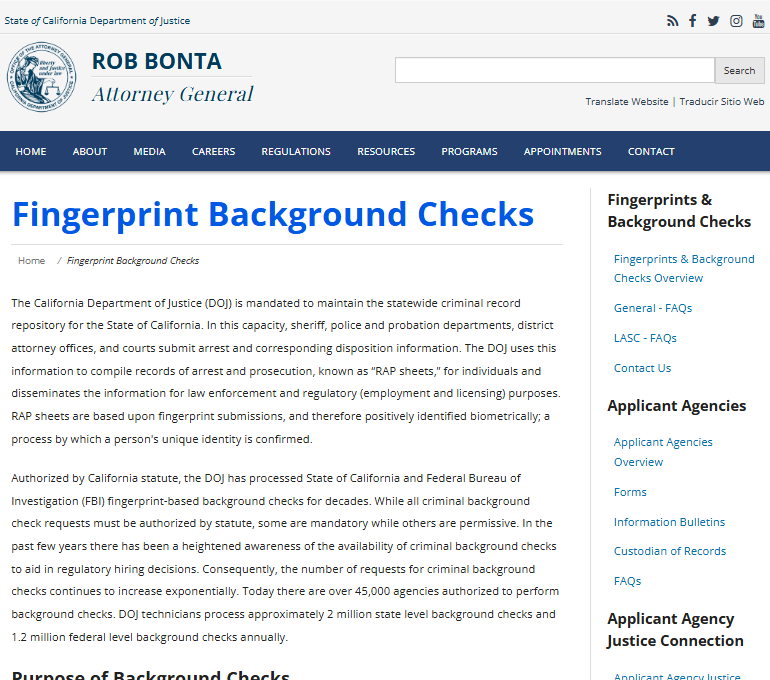
- Complete a request form (BCII 8016).
- Get fingerprinted at an approved live scan location.
- Pay a fee (currently $25).
- Wait 2–4 weeks for processing.
The report includes all arrests, charges, and dispositions in California, including warrant history. It is the most complete record available to the public.
Using Background Checks for Employment or Housing
Employers and landlords must follow strict guidelines when using criminal history. Under California law, they cannot discriminate based on arrests without convictions, except in specific cases. Always verify the source of the report and allow the individual to explain any records.
- Disqualification must be job-related and consistent with business necessity.
- Applicants must receive a copy of the report and a summary of their rights.
- Expunged or sealed records must not be considered.
Using unofficial or outdated sources can lead to legal liability. Always rely on verified, up-to-date records.
Most Wanted Lists and Public Safety Alerts
The Santa Cruz County Sheriff’s Office publishes a “Most Wanted” list for individuals with active felony warrants. These lists are used to enlist public help in locating dangerous or fugitive suspects.
Accessing the Most Wanted List
The list is available on the Sheriff’s website under the “News” or “Public Safety” section. It includes photos, names, last known addresses, and charges. Each entry specifies the warrant type and reward amount (if applicable).
- Updated monthly or as new warrants are issued.
- Includes only high-priority cases.
- Contact the tip line (831-454-7631) to report sightings.
Do not attempt to apprehend suspects. Report information immediately to law enforcement.
The Purpose of Most Wanted Lists
These lists are not exhaustive. Most active warrants do not appear on them. They are reserved for cases involving violent crimes, repeat offenders, or public safety threats. Inclusion does not imply guilt but indicates an active warrant exists.
- Use the list to stay informed about local threats.
- Do not use it as a personal background check tool.
- Report outdated or incorrect information to the Sheriff’s Office.
Public cooperation has led to numerous arrests, but misinformation can cause harm. Always verify details through official channels.
Subscribing to Public Safety Alerts
Residents can sign up for emergency alerts through the Santa Cruz County Office of Emergency Services. These notifications include warrant-related manhunts, missing persons, and shelter-in-place orders.
- Visit https://www.santacruzhealth.org to register.

- Choose email, text, or phone alerts.
- Alerts are sent only for critical incidents.
Staying informed helps protect communities and supports law enforcement efforts.
Legal Rights and Responsibilities Regarding Warrants
Knowing your rights is essential when dealing with arrest warrants. Individuals have protections under the U.S. and California Constitutions, including the right to due process and protection from unreasonable searches.
What to Do If You Have an Active Warrant
If you discover an active warrant, take immediate action:
- Do not flee or ignore the warrant—this can lead to additional charges.
- Contact a criminal defense attorney.
- Appear in court voluntarily or arrange for surrender through your lawyer.
- Post bail if eligible to secure release.
Voluntary appearance often results in more favorable treatment than arrest at home or work.
Your Rights During an Arrest
If arrested on a warrant:
- You have the right to remain silent.
- You have the right to an attorney.
- You will be informed of the charges against you.
- You may request a bail hearing.
Law enforcement must follow proper procedures. Any violations can be challenged in court.
Expungement and Warrant Clearance
In some cases, warrants can be cleared through court action. If charges are dropped or you are acquitted, the warrant is automatically recalled. For dismissed cases, you may petition for expungement under California Penal Code 1203.4.
- Expungement removes the conviction from public records.
- It does not erase the arrest or warrant history entirely.
- Consult an attorney to determine eligibility.
Clearing your record improves employment, housing, and licensing opportunities.
| Office | Address | Phone | Hours |
| Santa Cruz County Sheriff’s Office | 701 Ocean Street, Santa Cruz, CA 95060 | 831-454-2440 | Mon–Fri: 8:00 AM – 5:00 PM |
| Main Jail | 701 Ocean Street, Santa Cruz, CA 95060 | 831-454-7800 | 24/7 |
| Superior Court Clerk | 701 Ocean Street, Room 110, Santa Cruz, CA 95060 | 831-454-2060 | Mon–Fri: 8:00 AM – 4:00 PM |
(FAQs) About Santa Cruz County, CA Arrest Warrants Search
How arrest warrants work in Santa Cruz County can help individuals avoid unexpected legal issues and respond appropriately if a warrant exists. Below are answers to some of the most common questions about active warrants, public records access, bail options, extradition, and the differences between various types of warrants issued in California courts.
How long does an arrest warrant remain active in Santa Cruz County?
An arrest warrant in Santa Cruz County does not have an expiration date and remains active indefinitely until it is served, recalled by the court, or the case is dismissed. Once issued by a judge, the warrant is entered into local, state, and federal law enforcement databases, making it enforceable at any time. Even if years pass, law enforcement can still arrest the individual named in the warrant. The only way to resolve an active warrant is to appear in court, post bail, or have the case dismissed. Failure to address a warrant can result in additional charges, such as failure to appear, and may affect travel, employment, or professional licensing. It is important to check warrant status regularly and take prompt action if one is found.
Can I search for someone else’s warrant in Santa Cruz County?
Yes, you can search for another person’s warrant using the Santa Cruz County Sheriff’s Office online portal, but only if you have their full legal name. The system does not require your identity to be verified, so third-party searches are allowed. However, you cannot access sealed records, juvenile records, or warrants from other counties through this tool. The results will show the person’s name, date of birth, warrant number, charges, and bond amount if available. This information is considered public record under California law. Be aware that using this data for harassment, stalking, or discrimination is illegal. Always use warrant search tools responsibly and in compliance with privacy laws.
What happens if I have a warrant but can’t afford bail?
If you have an active warrant and cannot afford bail, you still have legal options. You can appear in court voluntarily and request a bail reduction hearing. At this hearing, a judge will consider your financial situation, ties to the community, and criminal history before setting a new bail amount. In some cases, the judge may release you on your own recognizance (OR), meaning you promise to return to court without posting money. If the charge is minor, the court may also schedule a new hearing date without requiring bail. It is crucial to have legal representation during this process. An attorney can advocate for your release and help negotiate favorable terms. Ignoring the warrant will not make it go away and may result in arrest at an inconvenient time.
Are warrant records available to the public in Santa Cruz County?
Yes, warrant records in Santa Cruz County are considered public information and are accessible through official channels. The Sheriff’s Office online portal allows anyone to search for active warrants using a name. Court records, which include warrant issuance and status, are also available online or in person at the Superior Court. However, certain records may be restricted if they involve ongoing investigations, juveniles, or sealed cases. While the information is public, it must be used lawfully. Misuse of warrant data for threats, discrimination, or harassment is a crime. Always verify the accuracy of records before taking action, and remember that an active warrant does not prove guilt—only that a judge found probable cause for arrest.
How do I clear an old warrant in Santa Cruz County?
To clear an old warrant in Santa Cruz County, you must first confirm its status using the Sheriff’s Office online search or by calling the Warrants Unit at 831-454-7601. If the warrant is still active, contact the court that issued it to schedule a hearing. You may appear in person or through an attorney. At the hearing, the judge will review the case and may recall the warrant if you have a valid reason for missing prior court dates, such as illness or lack of notice. If the underlying charge is dismissed or you are acquitted, the warrant is automatically cleared. For dismissed cases, you can also petition for expungement to remove the record from public view. Keep all court documents as proof of resolution. Failure to address old warrants can lead to arrest during routine traffic stops or background checks.
Can a warrant from Santa Cruz County be enforced in another state?
Yes, a warrant issued in Santa Cruz County can be enforced in other states through the Interstate Compact on Arrest Warrants and federal databases like the National Crime Information Center (NCIC). When a warrant is issued, it is entered into state and national law enforcement systems, allowing police anywhere in the U.S. to identify and arrest the individual. If you are stopped by law enforcement in another state and have an active California warrant, you may be detained and held for extradition. The process depends on the severity of the charge and the laws of the state where you are found. Felony warrants are more likely to result in extradition than misdemeanors. To avoid an unexpected arrest, resolve warrants before traveling. Consult an attorney if you believe a warrant exists and you plan to leave California.
What is the difference between a bench warrant and an arrest warrant in Santa Cruz County?
In Santa Cruz County, a bench warrant is issued by a judge when someone fails to appear in court, violates probation, or disobeys a court order. It is called a “bench” warrant because it comes directly from the judge’s bench. An arrest warrant, on the other hand, is issued after a criminal complaint is filed and a judge finds probable cause that the person committed a crime. Both types authorize law enforcement to arrest the individual, but bench warrants are typically related to court procedure failures, while arrest warrants stem from alleged criminal activity. Bench warrants often have lower bond amounts and may be resolved by appearing in court. Arrest warrants may involve higher bail and more serious charges. Both remain active until served or recalled and can be searched using the same online tools.